
If the BC Conservatives get their way, the courts once again become the default decision-maker on Aboriginal title decisions
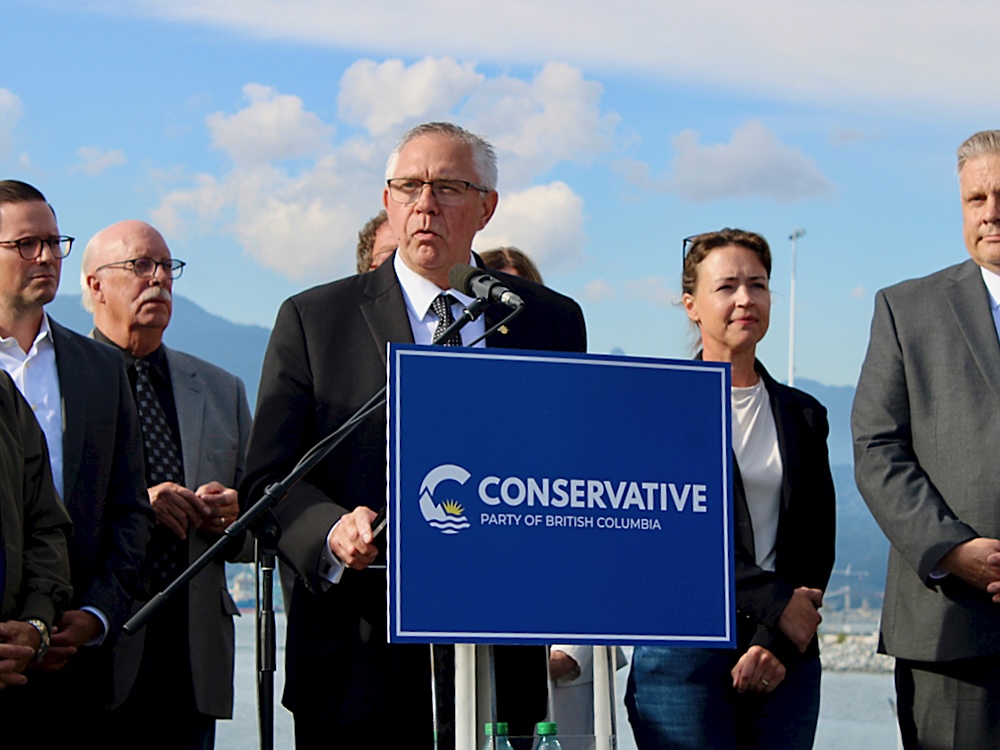 If the BC Conservatives get their way, the courts once again become the default decision-maker on Aboriginal title decisions. Photo for The Tyee by Jen St. Denis.
Conservative Party of BC interim leader Lorne Doerkson confirmed that if his party forms government, he would repeal the Declaration on the Rights of Indigenous Peoples Act as his top priority. Despite the many socio-economic issues facing British Columbia, DRIPA has been the primary focus of B.C. Conservative politicians for the past two years.
One lucky Tyee reader will get to choose from six great reads for kids and teens.
Saying that he would repeal DRIPA is the easiest part. Neither Doerkson nor any B.C. Conservative, for that matter, has clearly articulated what would come next.
Repealing DRIPA could not be the destination. It would have to be the first step, and the Conservatives have been so distracted by culture wars and “purity tests” in their race-to-the-bottom brand of politics that they have no idea what the second step is.
Their failure to develop even a modest Crown-Indigenous relations policy is not a path to certainty for British Columbia.
The law doesn’t leave with the statute
The Tyee is supported by readers like you Join us and grow independent media in Canada
Doerkson has been the MLA for Cariboo-Chilcotin since 2020. He must know the role the Tŝilhqot’in territory in his own riding played in defining the future of Aboriginal title in British Columbia. DRIPA was unanimously passed in the legislative assembly five years after the Supreme Court of Canada’s landmark decision recognizing Tŝilhqot’in title in 2014.
That Supreme Court decision doesn’t go away if DRIPA is repealed. Nor will any of the long line of court decisions before it: Calder; Delgamuukw; Haida; Section 35 of the Constitution Act, which protects Aboriginal and treaty rights; or the federal United Nations Declaration on the Rights of Indigenous Peoples Act.
What would disappear would be the tools that, used well, help the province move forward together. Gone would be the structured process, the Crown-Indigenous alignment work and the Section 7 agreements, which “outline the processes for joint or consent-based statutory decision-making.”
If the Conservatives get their way, the result is more uncertainty, not less, and the courts once again become the default decision-maker.
Then what?
For months, British Columbians have been told, by government and opposition parties alike, that investors need certainty.
The business community has expressed frustration. In a May 2026 survey done by the Business Council of BC, 98 per cent of its members said DRIPA is not “living up to its promise of creating investment certainty in B.C.” An equal percentage said they were “very concerned about DRIPA’s current implementation.” A majority said they supported repealing DRIPA.
However, it is important to understand what the business community asked for. Laura Jones, CEO of the Business Council of BC, said they want “durable reconciliation that protects the public interest, promotes prosperity, and helps close the socio-economic gaps still experienced by too many Indigenous people.” She stated clearly that the “desire to work with Indigenous communities to create prosperity for all remains strong.”
This is a call for a better way of implementing DRIPA. Repealing the act can’t deliver that. We know what effective implementation looks like when it works. The 2022 Section 7 agreement between the province and the Tahltan Nation led, this January, to the environmental assessment certificate for the Eskay Creek mine.
Other Section 7 agreements have already been signed. There was a second agreement with the Tahltan for the Red Chris mine, an agreement with the Simpcw First Nation for the Yellowhead mine and one with the ’Na̱mg̱is First Nation regarding forestry on northern Vancouver Island.
In 2025, the province authorized negotiation of a Section 7 agreement with the Tŝilhqot’in Nation, in Doerkson’s own riding. That’s the work that he is promising to halt.
Repealing DRIPA throws away the tools. Section 35 and the title court cases all remain, so we revert to a highly charged, litigious Crown-Indigenous relationship. With John Rustad’s retirement, a Conservative Party of BC government would have vanishingly few relationships with First Nations leaders to rely on.
The business community is frustrated by the government’s implementation of DRIPA, but repeal would leave them with less certainty than they have now.
Building resilience through relationships
Every B.C. government needs a working relationship with the province’s more than 200 First Nations. As Indigenous governments are increasingly effective in serving the socio-economic needs of their membership, they are also developing comprehensive negotiations and litigation strategies to defend and advance their rights and title.
First Nations are key partners in dealing with wildfire, stewarding ecosystems, managing resources and delivering services. The B.C. Conservatives have made little effort to build relationships with First Nations. Worse, their daily trolling of Indigenous rights in question period toxified the legislative assembly to the point that made it uncomfortable for Indigenous people to even visit the precinct.
Doerkson told the North Delta Reporter that he will repeal DRIPA and instead “engage with First Nations directly to form partnerships.” But as reporter Mark Page noted, many First Nations oppose changes to DRIPA, and Doerkson “couldn’t articulate what he would do if that opposition grew into protests and blockades.”
A headline is not a plan
Unplug the Anti-Indigenous Fear Machine in Victoriaread more
British Columbians, including the business community, cannot afford public policy that is only as deep as the headline. The B.C. Conservatives have a slogan but have offered nothing of substance after that.
Doerkson isn’t entirely wrong that something needs fixing, but he is wrong about what.
DRIPA’s weakness has been its implementation.
The government’s action plan for implementing DRIPA is opaque; the pace and priorities are set by government alone. The result is that reconciliation has become a list of boxes to be ticked. First Nations are frustrated with the slow progress.
But the answer is not to repeal DRIPA. The answer is to create legislation to implement DRIPA — legislation developed with First Nations and designed to support B.C.’s unique legal landscape and cultural diversity, with transparent accountability mechanisms and independent oversight.
Saying “repeal” is the easy part. Before the provincial election on Oct. 24, ask every candidate: Then what?
Read more: Indigenous, BC Election 2026, BC Politics


No comments:
Post a Comment